
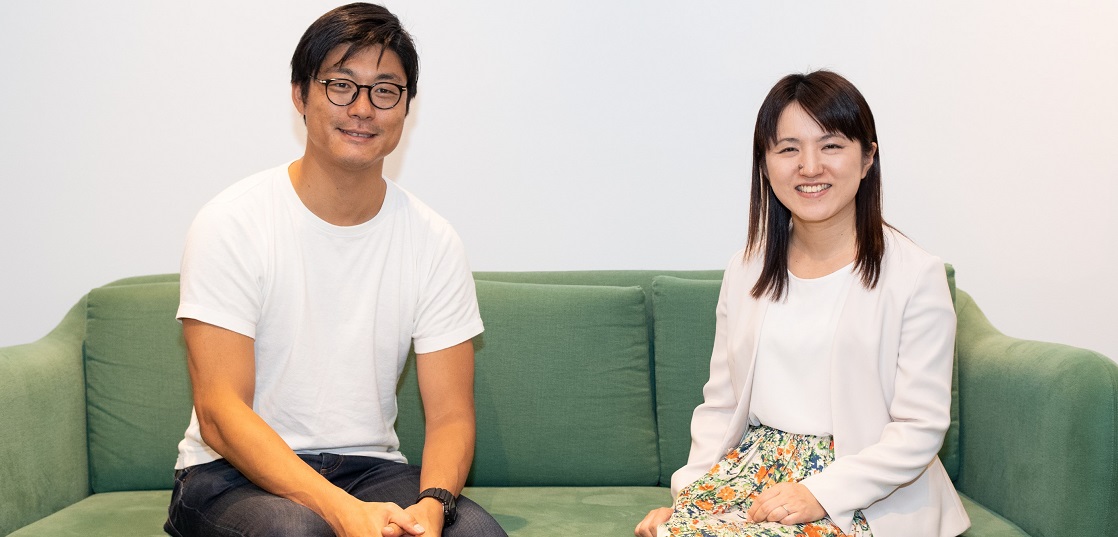
There are 1 million children in the world who are targeted for sexual exploitation due to human trafficking. Sayaka Murata, one of the founders of the certified NPO "Kamonohashi Project", has faced this problem since she was a student and is still active in the Asian region.
How should an organization aiming to solve social issues share thoughts and ideas and increase the number of friends? Euglena Vice President Akihiko Nagata, we will discuss from the standpoints of a non-profit corporation and a joint-stock company.
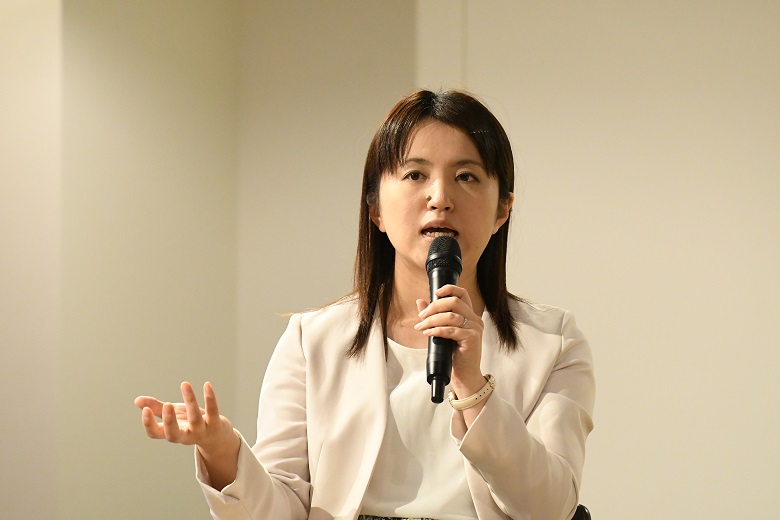
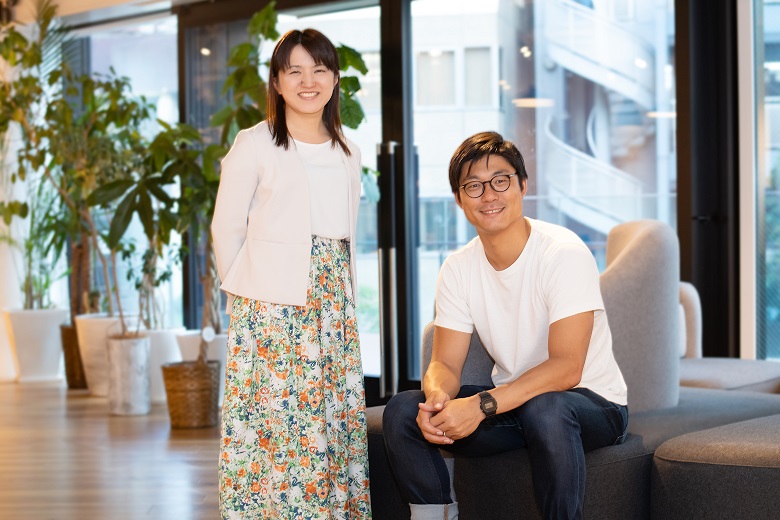
Sayaka Murata (Co-founder of Kamonohashi Project, a certified NPO)
Visited Southeast Asia in 2001 while attending college and learned about the problem of children being sold. Founded the Kamonohashi Project with friends. Currently, he has expanded his activities to India, and is continuing activities to help victims regain their lives and to create a social system in which children cannot be sold.
A child who sells for the same price as a dress
Sayaka Murata (hereinafter referred to as Murata): We are working to "eliminate the problem of children being sold". Children under the age of 18 have been tricked into being sold to brothels and forced to work. It is said that there are about 1 million such children all over the world.
I first learned about this problem when I was in the second year of college. While studying overseas support, I learned about the commercial exploitation of children. The first victim I learned from reading a newspaper article was a girl who lived in Myanmar, one year older than I was at the time. He was a mountain minority, had no nationality, his mother died of illness, and his father had a disability and was unable to work. At the age of 12, he was taken to a brothel when he was deceived by saying, "If you work as a babysitter in Bangkok, you can support your family." The amount she sold was 10,000 yen in Japanese yen. It's the same price as the dress I wore at that time, and in Japan, even college students can afford it if they work for a day or two.
After that, I visited Cambodia shortly after the civil war and witnessed the current situation of such damage. After that, I read books, attended events, and did whatever I could. During that time, I met a friend who said, "Let's form a group together," and at the age of 20, I established the Kamonohashi Project.
In Cambodia, we built a vocational training facility to accept "people who are likely to sell" and started activities aiming for financial independence. This is an activity to teach computer skills in a computer class and undertake a Japanese website production project. Some children got a job with the skills they had acquired or went on to college in the United States with a scholarship.
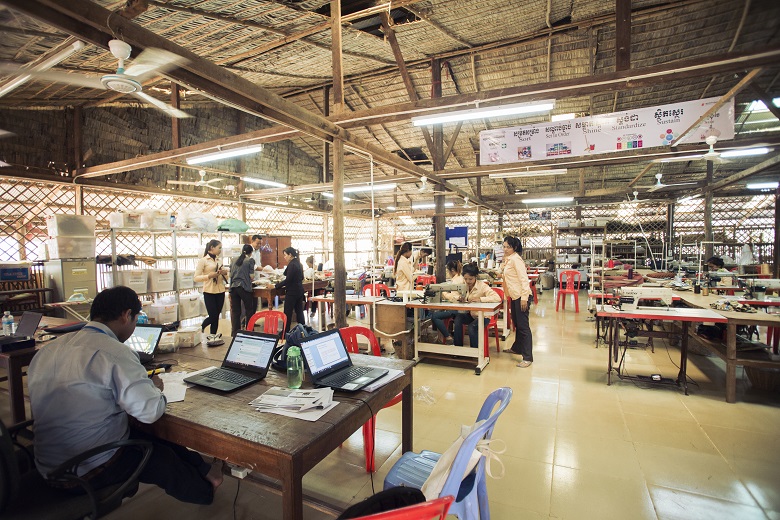
However, helping children in urban areas is not enough to stop the damage in rural areas. Computer classrooms have grown into a business that is useful to society, but we have returned to our original vision and launched a vocational training business in rural areas. In the process, there was a lot of discussion with friends, and some have left. We asked Japanese members to go to Cambodia, and we asked Cambodian members to come to Japan, and we all had a thorough discussion and made a decision.

The rural vocational training center that was created in this way hired women from the poorest households and made and sold miscellaneous goods using Japanese used foot-operated sewing machines. By accumulating these activities, the lives of poor families in rural areas in the support areas have gradually become richer. We also talked to the Cambodian government and worked on police support to eradicate the damage. The number of arrests of perpetrators has increased, and the number of brothels that force minors to work has dropped sharply. I think the situation in Cambodia has improved considerably.
Since then, we have shifted our focus to activities in India, providing mental recovery, educational support, trial support, and access support to administrative services so that the victims can regain their lives. Some of the victims have begun to act as leaders working to resolve this issue. Former victim leaders are now working to enact a law called the "Comprehensive Trafficking in Persons Control Bill" to change Indian society as a whole.
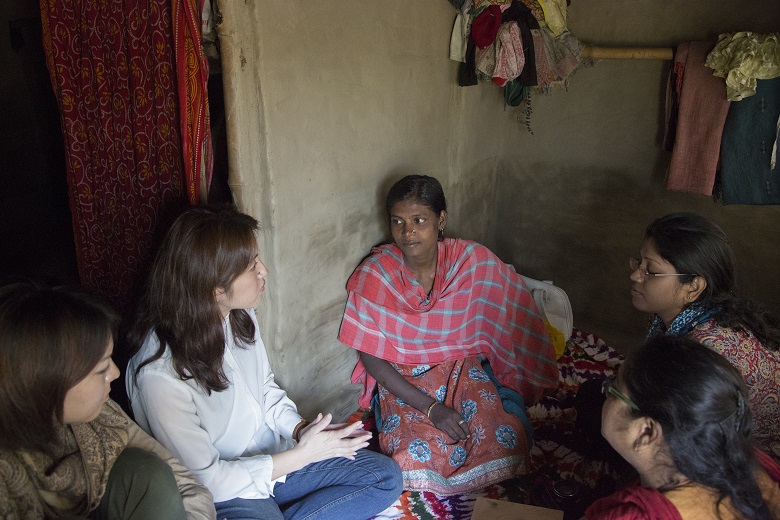
Currently, there are about 10,000 people who support the activities of the Kamonohashi Project. By 2024, we would like to increase the number to 20,000 and further expand the range of activities.
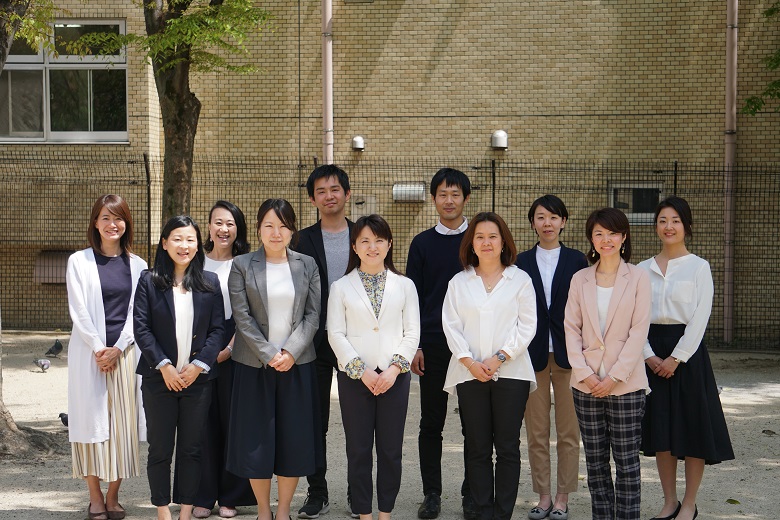
How to overcome cultural differences
Akihiko Nagata (hereinafter referred to as Nagata): From here, I would like to talk with Mr. Murata about the organization for solving social issues.
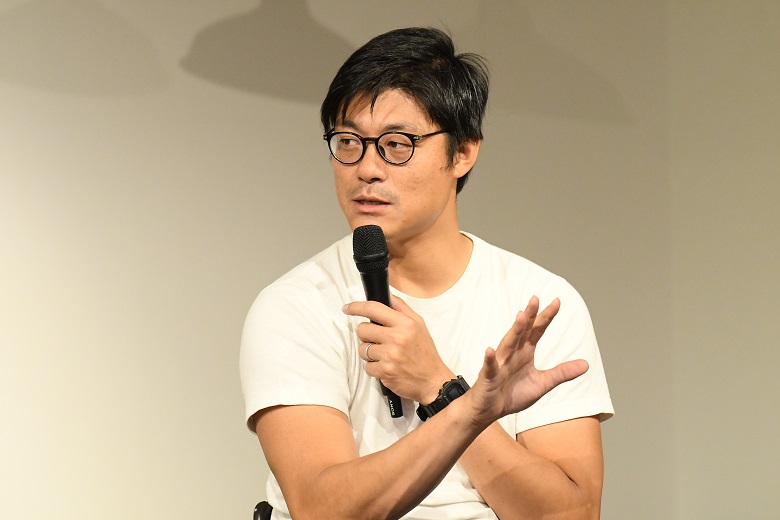
Euglena Co., Ltd./Representative of Real Tech Fund)
Graduated from Keio University Faculty of Commerce. Joined an independent private equity fund and belongs to the private equity and consulting departments. In 2008, he Our Ltd., and has been in charge of business strategy, M & A, financing, capital tie-up, public relations / IR, and management departments since the unlisted period of Our He is familiar with the strategy and finance fields that support technology, and is responsible for business development of Our Currently, he is appointed vice president and also serves as the representative of Japan's largest technical VC "Real Tech Fund".
Murata:Thank you.
Nagata: How many people are working on the Kamonohashi Project now?
Murata: There are 11 in Japan and 11 in India.
Nagata: Do you all have the same purpose for joining?
Murata: That's quite different. There are various things among co-founders, but they all share the same desire to contribute to society.
Nagata: Euglena may be close. So, I've been thinking a lot lately about how to make people who gather with various thoughts have the same sense of purpose and overlap.
Murata: Some platypus, like me, were founded when I was a university student, while others changed jobs from companies or from international organizations. There are diverse human resources with various thoughts and backbones, such as members of India. Therefore, how to overcome each other's thoughts and cultural differences was an issue.
Nagata: From the outside, all 22 people seem to have the same sense of purpose, but there are differences even in an organization that is large enough to talk with them.
Murata: Even after discussions, when I pointed out the parts I wanted to improve and discussed, it seemed like "stuck" at first (laughs). For example, I was asked, "Why don't you make a decision when you are a representative?" Even so, I have been talking repeatedly and thinking about what kind of wishes are behind the sharp words of the other party. Team building sessions are often held when members get together. We have also held workshops with all members from Japan and India that make use of our coaching knowledge.
Respecting diversity helps solve social issues
Nagata: Do you feel any change in Mr. Murata in the 17 years since the establishment of the Kamonohashi Project? I got to know Mr. Murata when I met him as a "daddy mom friend". Is there any influence from the change in your life stage as a mom with children?
Murata: Well, I think the tolerance for accepting people has expanded significantly. I'm a boy, but when I'm small, I sometimes hit him messed up.
Nagata: There is (laughs).
Murata: With that in mind, I've been sleeping every day (laughs). In that process, I came to recognize my new role of "raising my beloved child," and I no longer stick to being recognized as a manager. In the past, I had only been active in platypus since college, so I had an identity only there, and I was afraid that I would lose everything if I was kicked out of here. As a result, I think I was trying to make myself look strong and good, hiding what I couldn't do and lacking confidence, and keeping the team from discussing.
Nagata: It's important to be able to openly show your weaknesses and consult with them. As you said, I think that tolerance for people is also important. Recognizing that there are various people in the world and respecting diversity should help solve social issues. Therefore, besides becoming a parent, I would like to design a method within the company to increase the tolerance to people.
Murata: In our case, we support coaching as a group, and after joining the company, we try to have a coach for a certain period of time. By doing so, we can talk about things we can't say and talk about private matters without hesitation. As a result, work performance has improved, and I think it has become easier to resolve conflicts in each other's subconscious mind.
Nagata: What made you start doing that?
Murata: The number of people in the career change group has increased, and as I mentioned earlier, there have been more conflicts due to cultural differences. That's why I came to recognize the importance of coaching. Since the start of this initiative, the dissatisfied retirement rate has declined.
Nagata: Amazing.
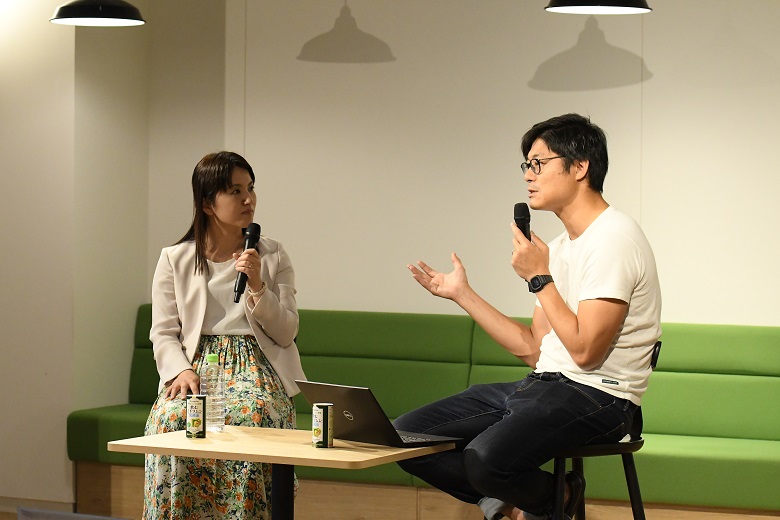
There can be various reasons for the "related population" to increase.
Murata: Oh, there was a retired manager (laughs). Co-founder Kenta Aoki has quit. He continues to support the independent Cambodian office, which is different from the platypus. And the director of Platypus continues. Recently, the number of members has increased, and I feel the need to expand the mission as a platypus.

Nagata: But it's difficult to expand the mission. Those who are supporting may also want to support it because it is the mission of the current Kamonohashi project.
Murata:I agree. There are some cautious voices about expanding the mission, both inside and outside the group. However, as I continued my activities, I realized that the problem of child prostitution also exists in Japan. The problem is spreading around us.
Nagata: There are various ways to understand the problem.
Murata: There are various performance indicators. Platypus is an easy-to-understand performance index that says "how to reduce the number of victims", but when it comes to talking about "eliminating absurdity", there are various indicators that are difficult to understand.
Nagata: In our case, we are a joint-stock company, so expanding the business of the company will increase the possibility of a solution, and it will be easier to get the approval of colleagues and shareholders who work together. NPOs like the Kamonohashi Project are different from corporations in that they collect donations and work.
Murata:Okay. However, there are many cases in which even if we increase donations and expand the scale as a group, we cannot say that we are approaching the solution of the problem we are aiming for. The important thing is not to increase the budget of one organization, but to collaborate with various stakeholders such as the government and companies.
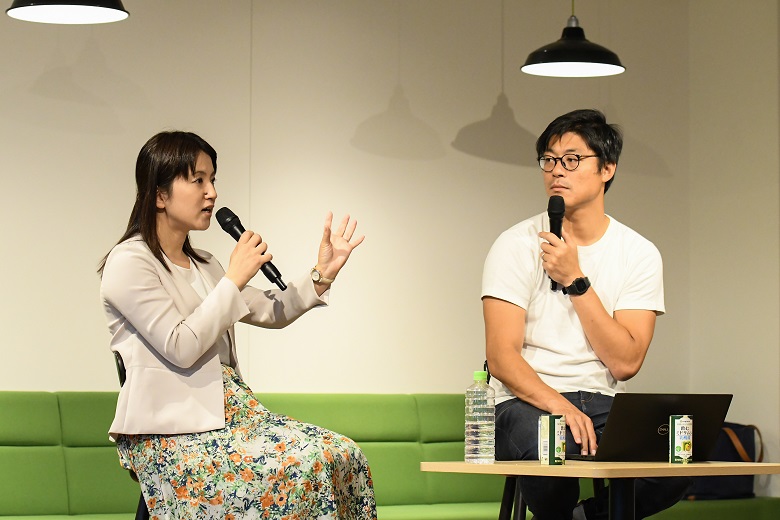
Nagata: What are the key points for collaborating with such external organizations?
Murata: I think it is whether we can facilitate how people with different ideas can work together toward a common agenda. If you want to solve a complicated problem, you need to collaborate with stakeholders in various positions, and it is natural that there will be more or less conflicts, and whether you can learn from the conflicts and move forward. I think that is the key.
Nagata:I see. I think there are many ways to climb mountains to change society. For example, when you want to change your school education, some people will join the Ministry of Education and aim for the top, while others will treat you with the desire to really improve the lives of the 10 students in front of you. Or maybe some people build their own school. I think there are many ways to do it. In the case of the Kamonohashi project, we are approaching the macro environment at the same time while entering the site and solving what is happening at the site. I think this is insanely amazing.
Murata: That's a very nice word. Because I continue to make policy proposals while supporting the field. Partly because of the division of roles of the co-founder, I rather looked at the site, and Keisuke Motoki, another, thought about things from a macro perspective. In India, the affected children and young people have become leaders and participated in the support. I think this is also a big achievement.
Nagata:That's right. Recently, I feel that "increasing the number of people involved" is very important. It is important to increase the "related population" who will be involved in various ways, such as those who go to the site, those who donate, and those who like and spread on SNS. It's easy to think heavily about solving social issues, but I hope that the number of people involved will increase for various reasons, such as "because it's cool," "because it's interesting," and "because my favorite child is doing it."
Murata: You're right.
Nagata: Sometimes it's fundamentalist to think that "people who go to the site are great", but that's not the case. I think it is also important to increase the number of organizations and organizations related to each other, such as the Kamonohashi Project and Our It is strongly encouraging to have people like Mr. Murata who are active with aspirations.
Murata: Euglena is also attracting attention from the NPO side. Recently, many "people who want to solve social issues" Euglena to improve society, so "I think it was the role of NPOs to solve social issues." You may hear a cry of "!".
Nagata:Really?
Murata: So, I hope we can continue to connect with each other while working hard and working hard (laughs). Thank you for your time today!
* Honorific titles omitted in the text
Editing: Shinsuke Tada / Photo: Reiko Inada